Materials & sleep
Inside Natural Organic Mattresses: Materials, Layers, and Care
A mattress is less a single object than a quiet composition: a supportive base, softer upper layers, a cover, and the choices that hold them together. Natural and organic models make those decisions especially visible. Understanding what each material does—and what it asks of you in return—can make comparison feel less like decoding a label and more like choosing the right balance of comfort, construction, and care.
Published November 17, 2026
In the language of interiors, a bed can be styled in an afternoon. The mattress beneath the linen is a more intimate decision, shaped by hours of contact and years of use. It is also a layered system. The feel at the surface depends not only on the top material, but on how the layers beneath it compress, recover, and distribute weight. A natural organic mattress may combine latex, wool, cotton, or other materials, yet the words on the label alone do not tell the whole story.
What matters is the relationship between composition and construction. A breathable cover cannot compensate for an unsuitable support feel; a resilient core does not guarantee a comfortable surface for every sleeper. The most useful approach is to consider the mattress as a whole: what it is made from, how its layers are arranged, what certifications apply to which components, and how its care instructions fit everyday life.
What “natural” and “organic” can tell you
“Natural” is a broad description, not a complete specification. It may refer to a material’s origin or simply distinguish it from certain synthetic alternatives. “Organic” is more specific when it is supported by an applicable certification, but the scope matters: a certificate may relate to the latex, textile, wool, or a particular stage of production rather than every component in the finished mattress.
For that reason, read claims component by component. Ask which materials are certified, what the certification covers, and whether it applies to the finished product or an ingredient within it. A clear materials list is more informative than a general sustainability phrase. It should identify the core, comfort layers, quilt filling, cover fabric, and any adhesives or other construction elements the manufacturer chooses to disclose.
Certification is a useful starting point for understanding standards and traceability, not a substitute for investigating comfort or care. Even a carefully documented mattress may not suit every body or sleeping position. The practical question is whether the materials, firmness, dimensions, support system, and maintenance requirements make sense for the person using it.
The layers beneath the surface
A mattress’s character emerges from its layers working together. The bottom portion generally provides the structural foundation; the middle helps shape support and alignment; the uppermost layers influence initial cushioning and pressure at the surface. Some designs use one continuous core, while others arrange several sections or layers that can be adjusted or replaced. There is no universal recipe. Thickness, density, firmness, zoning, and the way components are enclosed all affect the experience.
The support core
Latex is one material used in natural mattress cores. It is often described as responsive: when compressed, it tends to spring back rather than retain a deep impression in the way some slower-recovering foams do. That quality can make movement across the surface feel comparatively easy, although the sensation depends on the latex formulation, firmness, thickness, and layers above it.
There are different processes for producing latex, including Dunlop and Talalay. These names describe manufacturing methods, not a simple ranking of quality. A shopper comparing them should focus on the finished layer’s stated feel and role, as well as its specifications and certification. Manufacturers may also offer different firmnesses or zones within a core. Zoning is intended to vary support across parts of the body, but its usefulness is personal; it is worth checking how the zones are positioned and whether they can be configured for the intended sleeper.
The comfort layers
Above the support core, one or more softer layers can ease the transition from the sleeping surface to the firmer structure below. In latex designs, a softer latex layer may provide cushioning while retaining a buoyant feel. Wool may appear as a quilted layer or wrap, adding softness and contributing to the mattress’s temperature and moisture behavior. The result depends on the amount of each material and how it is assembled, not simply on the presence of a natural fiber.
Layer thickness helps explain why two mattresses made from similar ingredients can feel quite different. A deep soft layer can create a more cushioned first impression; a thinner one may let the firmer support below be felt sooner. A topper can also change the overall height and surface feel, so compare the mattress alone with the complete configuration if a topper is included.
The cover and quilting
The outer cover is the mattress’s most visible textile, but it is not necessarily a removable, washable shell. Cotton may be used for the fabric, while wool is sometimes quilted into the cover. The cover’s construction affects its hand, breathability, and how the mattress is cleaned. Before buying, establish whether it unzips, whether it can be washed, or whether the instructions permit spot cleaning only. “Removable” and “machine washable” are not interchangeable.
How to think about support and comfort
Mattress firmness is often presented as a scale, but the number or label is only a general guide. The same mattress can feel different to people with different body shapes, weights, sleeping positions, and preferences. A side sleeper may prioritize cushioning around the shoulder and hip; a back sleeper may look for a surface that feels supportive without excessive pressure. These are starting points for comparison, not rules that predict an individual outcome.
Consider comfort in two parts. First, notice the surface: does it feel too yielding, too firm, or balanced? Second, consider the support beneath it: does the body feel held evenly, or does one area sink or press uncomfortably? Allow enough time to assess both, and check the trial or return policy before purchase. If a mattress allows customization by side or zone, understand what can actually be changed and whether those options remain available after delivery.
Couples may have distinct preferences, and a shared mattress can make compromise complicated. Some designs offer separately configurable layers, particularly in larger sizes. This can be useful, but it is important to verify which sizes permit customization and whether each side can be adjusted independently. Also consider the practicalities of changing layers and keeping the two sides aligned.
A closer look at a layered latex example
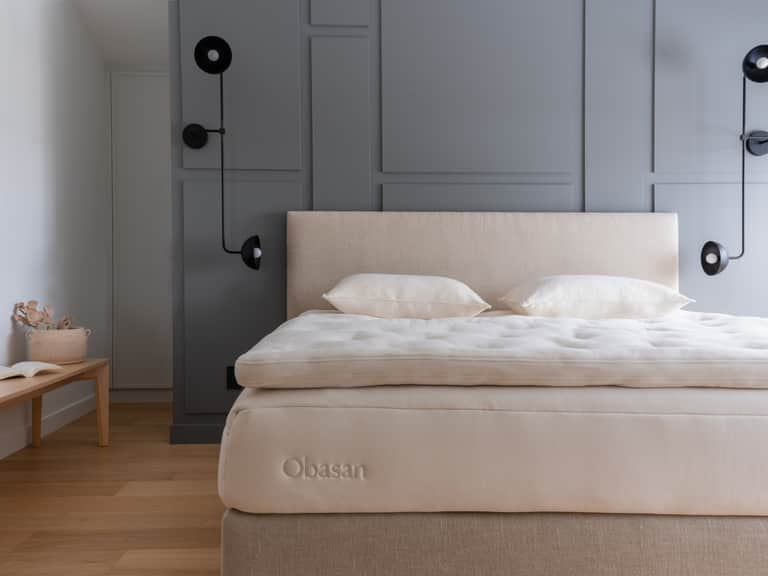
The Obasan Deluxe Dunlop Latex Mattress illustrates how a natural mattress can combine several distinct elements rather than relying on a single block of material. Its listed construction includes a four-inch base layer available in medium or firm, a customizable three-zone latex core, and a two-inch softer top layer. An organic cotton cover quilted with wool surrounds the mattress, and a separate 2.5-inch latex-and-wool topper is included.
That configuration makes several useful comparison questions concrete. The base firmness can influence the overall support feel; the zoned center offers a way to tailor sections of the bed; and the softer top and topper add cushioning. Because the topper changes the complete bed’s height and surface, it is worth evaluating the mattress as supplied rather than considering the ten-inch core in isolation. The product details also state that queen and king sizes can be customized by side, a distinction couples may want to confirm before ordering.
Care instructions are equally specific. The listed guidance calls for a supportive foundation with slats one to four inches wide and no more than three inches apart, plus middle support for larger sizes. It advises against placing the mattress directly on the floor or a solid platform. The cover is described as spot-clean only rather than machine washable, and the removable cover should be aired seasonally. These details are part of the mattress’s practical design: a material choice is only as easy to live with as the care routine it requires.
The small print that deserves attention
Specifications reward a slower read. Confirm the exact dimensions for the chosen size, the mattress height with and without any topper, and the recommended foundation. Check whether components are wrapped individually, whether layers can be rearranged, and whether the cover is removable. If a manufacturer provides a warranty, review its term and conditions rather than relying on the number of years alone. Warranty language commonly defines what is covered and under what circumstances.
- Materials: Identify the core, comfort layers, cover fabric, quilting, and any additional components.
- Certifications: Check which materials or stages are certified and what the named standard covers.
- Layer design: Compare thickness, firmness, zoning, and whether configurations can be changed.
- Fit and height: Measure the bed frame, fitted sheets, and available clearance, including any topper.
- Foundation: Follow the maker’s requirements for slat spacing, center support, and compatible bases.
- Care: Distinguish between spot-cleaning, airing, removable covers, and machine-washable textiles.
- Trial and warranty: Read the terms before delivery, including any conditions that affect returns or coverage.
Care that preserves the construction
Mattress care begins with the foundation. A base that meets the manufacturer’s requirements helps support the mattress evenly, while excessive gaps or missing center support may undermine that support. Check the frame before delivery, especially for larger sizes, and confirm that its dimensions and construction match the mattress instructions. A mattress protector can help limit contact with spills and everyday soil, but choose one compatible with the mattress’s care guidance and preferred surface feel.
Keep liquids away from the mattress and respond promptly to accidental spills. When spot cleaning is allowed, use only the method specified by the manufacturer. A small amount of mild soap and minimal moisture may be appropriate for some covers, but instructions vary; soaking, vigorous scrubbing, or using an unapproved cleaning product can damage fabric or leave moisture inside. Allow any cleaned area to dry fully before replacing bedding.
Do not assume that a removable cover belongs in the washing machine. Some covers are designed to be unzipped for limited cleaning but are not washable. Likewise, interior latex and wool components typically have different care needs from a cotton sheet. Keep the mattress out of direct sunlight and away from strong heat sources when the instructions advise it. Periodic airing can refresh a sleep surface, but it should be done in a way that avoids prolonged exposure to sun or damp conditions.
Some mattresses are designed to be rotated or have their inner layers turned; others are not reversible. Follow the specific directions rather than applying a familiar routine automatically. If a manufacturer recommends rotating cores on a schedule, note the interval and the correct orientation. A thoughtfully maintained mattress is not necessarily a maintenance-free one, and modest, consistent care is often more sensible than an occasional intensive clean.
Natural materials and the question of sustainability
Material origin is one part of a broader environmental picture. Certifications can offer defined information about particular ingredients or production practices, while durability, repairability, packaging, transport, and end-of-life options also matter. A product described as organic is not automatically impact-free, and a natural fiber does not answer every question about manufacturing. Look for specific, verifiable claims and avoid treating a single label as a complete environmental assessment.
Longevity is another practical consideration. A mattress that suits its user and remains properly supported may stay in use longer than one replaced because its comfort or construction no longer meets expectations. Modular layers may offer options for adjustment, but only if replacement components and instructions are accessible. Ask what can be repaired or refreshed and how worn parts are handled. These details can reveal more about a mattress’s long-term usefulness than a broad promise of permanence.
A considered choice, rather than a perfect label
Natural organic mattresses are best understood through their particulars: the materials in each layer, the firmness and structure of the core, the role of the cover, and the instructions that govern cleaning and support. Two products can share familiar ingredients and still deliver different experiences because their layers are arranged differently. Conversely, an elaborate specification is not automatically a better match for a particular sleeper.
Begin with the sensation you want, then test that preference against the mattress’s construction. Check certification claims at the component level, verify the foundation requirements, and read care guidance before the bed arrives. The right choice is not defined by a fashionable material name or an impressive list of layers. It is the one whose feel, documented composition, and everyday upkeep fit together—quietly, comfortably, and for the long term.